 Stratux
Taildragger Quest: a free 8-bit pilot adventure with a Stratux in the toolbox
Remember the classic 8-bit adventure games, where you walked a tiny hero from screen to screen, swung a weapon, found a new tool and used it to open the next part of the map? Taildragger Quest is that, with a student pilot, a grass strip and a gang of avionics gremlins. It's the newest game in the Stratux Arcade, it's free, and it runs in your browser on a phone, tablet or laptop. There's no sign-up and nothing to install.
The story
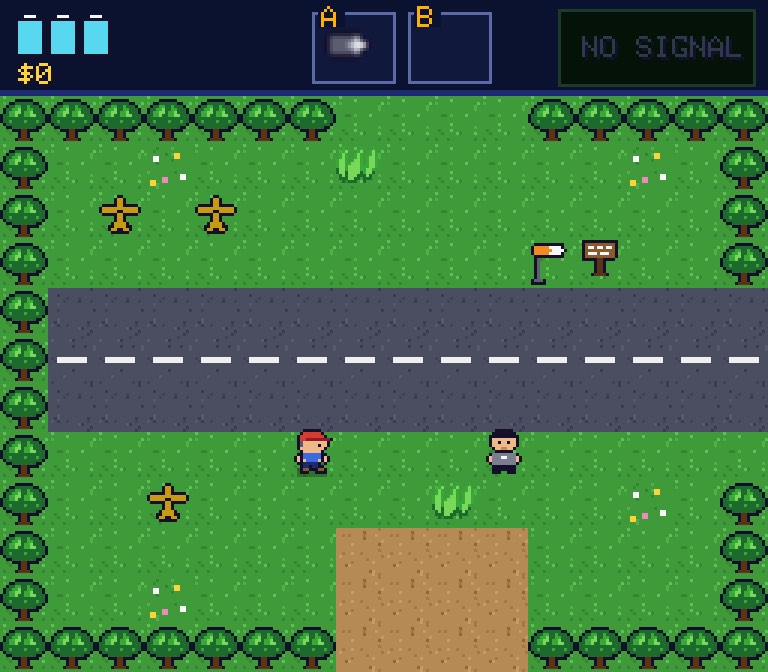
It's the night before your checkride at Sleepy Hollow Field. While you slept, the gremlins raided the FBO and scattered your logbook endorsements across the county. No endorsements, no checkride.
Old Hank, your flight instructor, hands you a flashlight. "Preflight everything. Trust nothing. Go get your logbook back." That's the whole setup, and it's enough. Three endorsements means three regions, and each region has a dungeon, a boss and a very strong opinion about how you should have checked the weather.
How it plays
The controls are small on purpose.
- Move with the arrow keys or WASD. Walk off the edge of a screen and the next one slides in.
- Swing with A (Z, J or Space). That swings your tool, and it also talks to people.
- Use item with B (X or K). This fires your current dungeon item. Tab or I opens the flight bag.
Your health is fuel. You start with three tanks, each with four quarters, and every boss drops a Long-Range Tank to make you tougher. There are no levels or experience points. You get stronger by finding things: tanks, new tools and a few secrets. Bucks drop from enemies and tall grass, and you spend them at the FBO desk on coffee to refill your tanks, a headset that halves the damage you take, and kneeboard maps of the dungeons. Talk to the FBO desk to save. If you run out of fuel, you're grounded for a moment and then you carry on from your last save.
On a phone, an on-screen pad and A, B and BAG buttons appear under the game.
Three regions, three tools
Each region has an overworld to explore, a dungeon with a mini-boss and a boss, and one tool that opens the way to the next region.
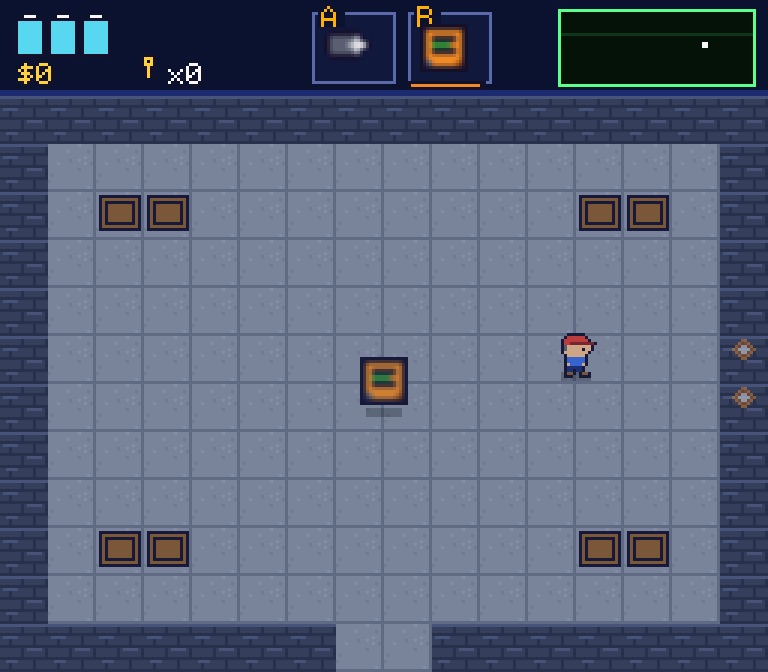
1. Sleepy Hollow Field and the Old Hangar. A grass strip, a windsock, tied-down taildraggers and a farmer who's very tired of rats. Hangar Rats, Mud Daubers and Fire Ants wander the fields. The Old Hangar teaches you the basics: keys, pushing a fuel drum onto a floor plate, and a Rogue Tug that charges in straight lines when it sees you. Inside you find the Marshalling Wands (a stronger swing) and the Stratux receiver. The boss is the Mud Dauber Queen, who nests in a giant pitot tube. Hank's advice is the best preflight tip in the game: always check the pitot tube.
2. Ridge Country and the Mountain Wave Caverns. Pine forest, a sloping mountain strip and a pass that is socked in with fog. Gust Devils shove you around, geese cross the valley in V formations (a red arrow flashes at the screen edge first) and marmots chew wires. In the caverns the wind never stops, so you walk against it or hold on. The mini-boss is the Rotor. The tool is the Tie-Down Rope: fire it up to four tiles to latch onto a post, cross a gap, stun small enemies or pull in a pickup. The boss is the Downdraft, a cloud with a face and bad intentions.
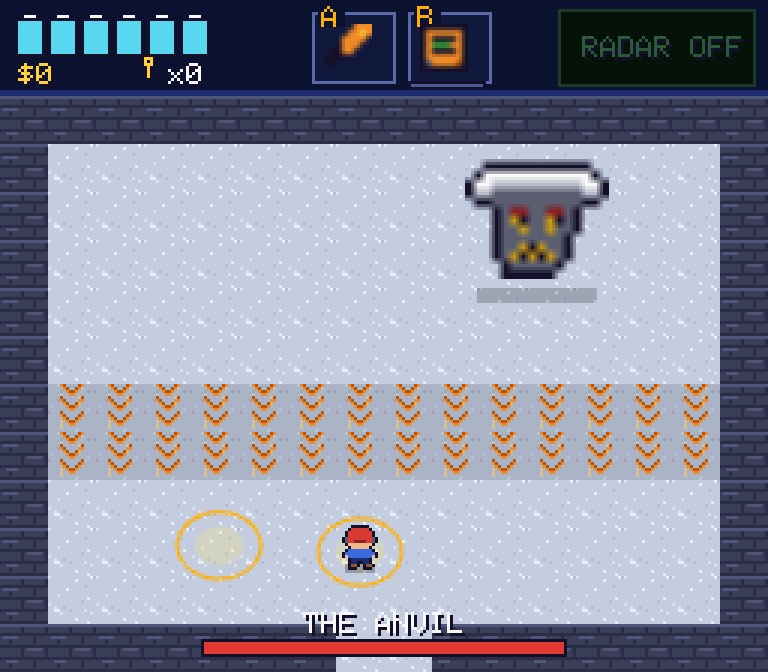
3. Bravo Bay and the Thunderstorm Cell. A beach, a seaplane dock, and a busy airport with a tower controller who only speaks in clearances. Seagulls, crabs and Static Gremlins patrol the shore. The Thunderstorm Cell has lightning floor tiles that flash yellow before they strike, so you learn to move on the quiet beat, plus slippery ice and strong gusts. The mini-boss is the Squall Line. The tool is the Windsock, which calms the wind in a room for ten seconds. The boss is the Anvil, a cumulonimbus with a face that throws lightning, hail and microburst rings in three phases.
The Stratux in the toolbox
The first dungeon item is a Stratux receiver. It's an in-world gadget, an orange box a gremlin dropped. Hank explains it in one line: "ADS-B In: shows you traffic you cannot see out the window."
In the game, switching the Stratux on shows things that are otherwise hidden: invisible "traffic" gremlins that can only be hit while it's on, hidden doors marked with orange diamonds, and a little radar in the HUD that shows the enemies in the room. It also drains a battery bar while it's on, and recharges when you turn it off, so you can't just leave it running. Later it opens the fog pass into Ridge Country and a secret sea cave in the dunes of Bravo Bay.
That's a small joke about the real thing. A real ADS-B In receiver shows nearby aircraft on a tablet, which is exactly what you want when you can't see them. If you'd like to know how that works, read how ADS-B works. The game is about the fun, and the receiver in it is not for sale.
The checkride ending
Bring all three endorsements back to Sleepy Hollow and the examiner is waiting. Kind but stern, the examiner asks three quick questions that call back to the adventure: the pitot tube, mountain wave and thunderstorms. How far should you stay from a severe thunderstorm? At least 20 nautical miles.
You can't fail for good. A wrong answer gets a short, friendly explanation and another try. Pass, and you get a takeoff scene, a PRIVATE PILOT title card, your flight log and a chance to post your score to the TOP PILOTS board.
Your score counts endorsements, bucks collected, three hidden Aux Tanks (one per region) and a time bonus for finishing quickly, minus a little for each grounding.
Why an aviation RPG?
Pilots already live in a role-playing game. You collect certificates and endorsements, you carry the right gear, you learn what each hazard does and you check the map before every big decision. A checkride is just a boss fight with a clipboard.
The arcade also has a lot of games for the brain, such as quizzes and word puzzles. We wanted one where you just walk around, talk to odd characters and learn a few real things by accident. Mountain wave, wind shear, bird strikes and thunderstorm avoidance all show up as things you have to deal with, and the aviation facts are kept general on purpose.
Tips for your first run
- Talk to everyone. The hints are real. People tell you where the secrets are and how bosses move.
- Hit the tall grass. Folks lose all sorts of things in there, mostly bucks.
- Turn the Stratux off when you don't need it. The battery recharges while it's off.
- Watch for the red arrow. It flashes before the geese arrive. Step out of the lane.
- Learn the boss, then hit. Each one has a pattern. The Queen is hittable when she lands, and the Anvil is calmest once you plant the windsock.
- Buy the headset in Ridge Country. It costs $150, and it halves the damage you take for the rest of the game.
- Save at the FBO desk. It's the one place you can count on.
Credits
Designed by Sean Chuplis. Coded by Claude Code (Claude Sonnet 5.5, Claude Opus 5.5). Every sprite, tile and song is drawn and written in code, and nothing is borrowed from other games.
Play it
Grab the flashlight, find the Old Hangar and see how long the Queen lasts. Play Taildragger Quest free. If you earn your private pilot certificate, tell us what the checkride question was like.